 UK
UK US
US 





Arc Flash Clothing and PPE
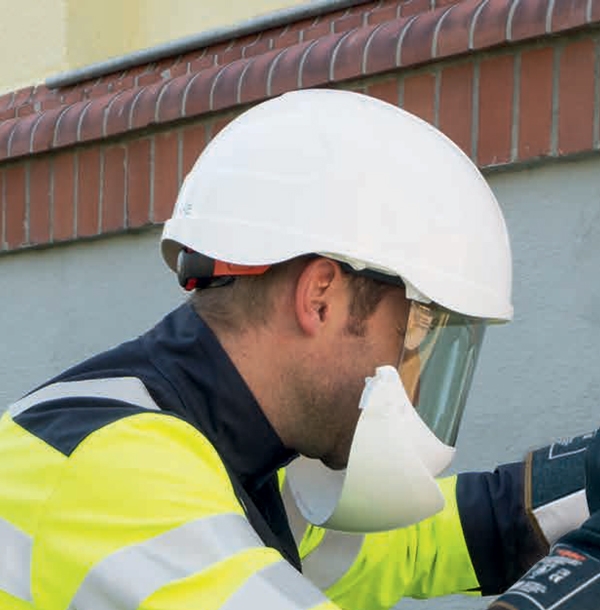
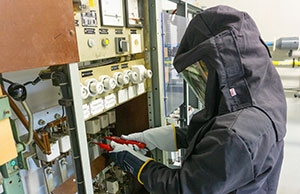
Our range of arc flash protective clothing has been created in accordance with both national and international safety standards. Arc flash PPE is the last line of defence, protecting the wearer from serious injury, particularly the burns caused by the thermal energy released during an arc flash incident. In that situation, the right level of protection matters more than having protection at all.
Below you will find the full range, from lower energy garments through to high level switching suits, along with guidance on how arc ratings work and how to choose the level your risk assessment calls for.
What arc flash is, and why PPE is the last line of defence
An arc flash is a sudden release of energy caused by a fault between conductors, or between a conductor and earth. It produces intense heat, light, and pressure in a fraction of a second, and the thermal energy causes the most serious injuries to anyone working nearby.
Controlling that risk always starts with the work itself, by de-energising wherever possible, by using safe systems of work, and by keeping people at a safe distance. PPE protects the worker when the risk cannot be removed entirely, which is why it is described as the last line of defence rather than the first.
For a fuller explanation of how an arc flash happens and what it does, read what is arc flash. For the case for specifying proper protection, see how does arc flash PPE save lives, and for controlling the risk at source, how to manage the risk of arc flash.
Understanding arc ratings, cal/cm2 and ATPV
IEC 61482-2 is the standard covering protective clothing for the thermal hazards of an electric arc. Garments tested to the IEC 61482-1-1 open arc method carry an arc rating expressed in calories per square centimetre (cal/cm2), shown on our product pages as the ATPV.
In plain terms, the cal/cm2 figure tells you how much thermal energy the fabric has been tested to withstand. A garment with a higher arc rating protects against a higher incident energy. The figure that matters is not the highest available; it is the one that meets or exceeds the incident energy identified for the task in your arc flash risk assessment.
Higher is not automatically better. Heavier, higher-rated garments are warmer and more restrictive to work in, and uncomfortable PPE tends not to be worn properly. Matching the rating to the assessed risk usually gives better protection in practice than over-specifying it.
Arc ratings also appear on equipment labelling. Arc flash labelling requirements explains what those labels should tell you before work begins.
Arc flash PPE categories, and how to choose your level
Buyers often search for arc flash clothing by category, asking for category 2 clothing or a category 4 suit. That language comes from the American standard NFPA 70E, which groups PPE into categories, each with a minimum arc rating. Clothing supplied in the UK and Europe is specified by its arc rating in cal/cm2 under IEC 61482, which is why you will see both systems referred to.
Whichever term you start from, the process is the same:
- Have an arc flash risk assessment carried out to establish the incident energy for the task.
- Identify the arc rating that meets or exceeds that incident energy.
- Select garments at that rating, remembering the rating applies to the clothing system as a whole, including any layers worn underneath.
- Add the face, head and hand protection the task requires.
If you are not sure which level applies, send us the values from your risk assessment, and we will match products to them.
What a complete set of arc flash PPE includes
Arc flash protection works as a system. A rated jacket or coverall is not complete protection on its own, because the face, head and hands remain exposed.
A typical set includes:
- Body protection from the single colour range, the two tone range or the high visibility collection, covering jackets, trousers, shirts, sweatshirts and coveralls.
- Arc flash switching suits for higher energy switching work.
- Face and head protection, including arc flash hoods, face shields and balaclavas.
- Arc flash gloves for hand protection.
- Under base layers, worn beneath outer garments. Layers worn next to the skin should also be arc rated.
- Wet weather outer wear where the work is outdoors, including waterproof jackets, trousers and salopettes.
- Arc flash PPE kits where a matched set is easier than specifying items individually.
Getting your risk assessed
Choosing the right level of protection depends on knowing the incident energy for the task, and that comes from an arc flash risk assessment. Reece Safety carries out arc flash surveys to establish those values, and runs safety training and consultancy for teams working on or near live equipment. If you already have assessment figures, send them to us and we will match products against them.